
(updated February 2026)
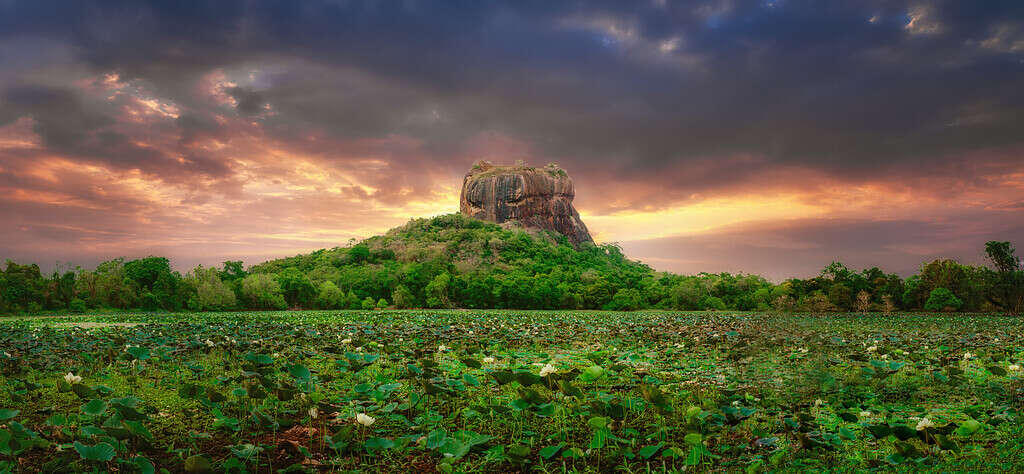
Climbing Sigiriya Rock is undeniably one of the best things to do in Sri Lanka. Steeped in tragedy and history, this colossal monolith is truly awe-inspiring. However, reaching the ancient rock fortress in the heart of the “Cultural Triangle” is not an easy task. You may be wondering how to visit Lion’s Rock and whether climbing it is worth the effort.
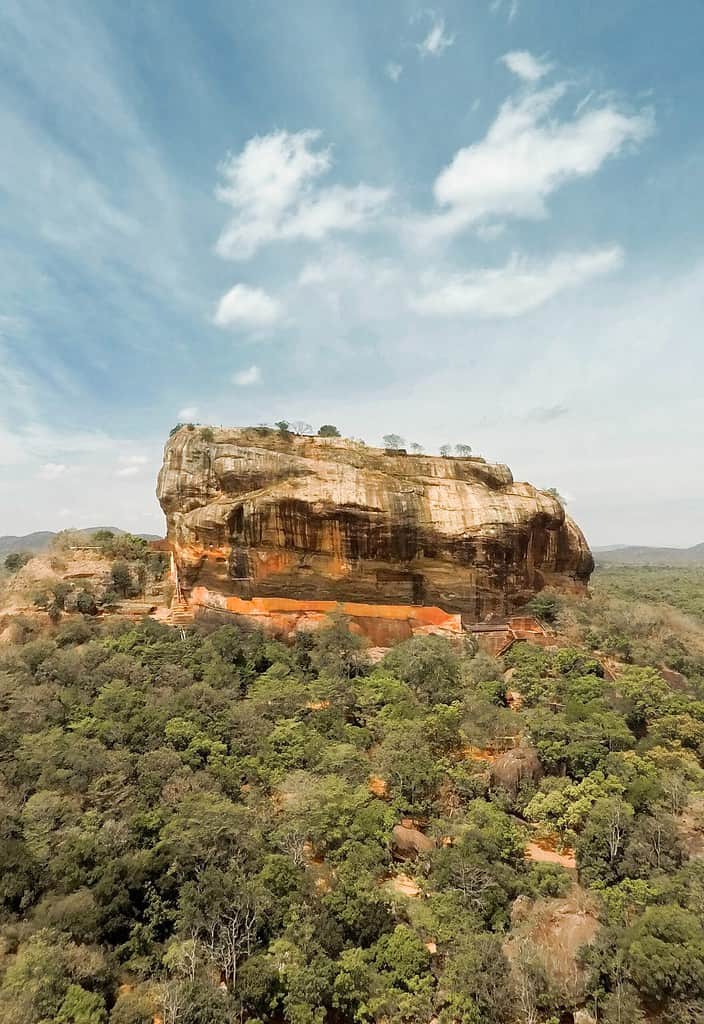
Without question, Sigiriya is worth climbing. As one of Sri Lanka’s UNESCO World Heritage sites, millions of visitors hike Sigiriya Rock to experience its majesty. Towering 660 feet high, climb Sigiriya to appreciate its gardens, architecture, art, innovative urban planning, and panoramic views.
This Sigiriya travel guide will help you plan your trip to this important landmark. We recently climbed Sigiriya and will share everything you need to know before you visit. Keep reading to find out more!
DISCLOSURE: PLEASE NOTE THAT SOME LINKS BELOW ARE AFFILIATE LINKS. I EARN A MINIMAL COMMISSION THAT SUPPORTS MY SMALL BUSINESS AT NO ADDITIONAL COST TO YOU.

Where Is Sigiriya Located?
Sigiriya Rock Fortress is in the small town of Sigiriya, Sri Lanka. Located in the Matale District of central Sri Lanka, this area is known as the “Cultural Triangle”. This region contains many sacred cultural sites, including Anuradhapura, Dambulla, Polonnaruwa, and Kandy.
Seeking Stamps Tip: If you are limited on time, focus on the attractions of the Cultural Triangle in your Sri Lanka itinerary. A stop here can be combined with Dambulla, Kandy and the tea plantations in Hill Country.
Is Sigiriya Rock Worth Climbing?
Climbing Sigiriya Rock Fortress is a thrilling thing to do in Sri Lanka. Keep reading to find out the main reasons Sigiriya Rock is worth visiting.
1. Climb Sigiriya Rock to Appreciate Its Impressive Size and Beauty
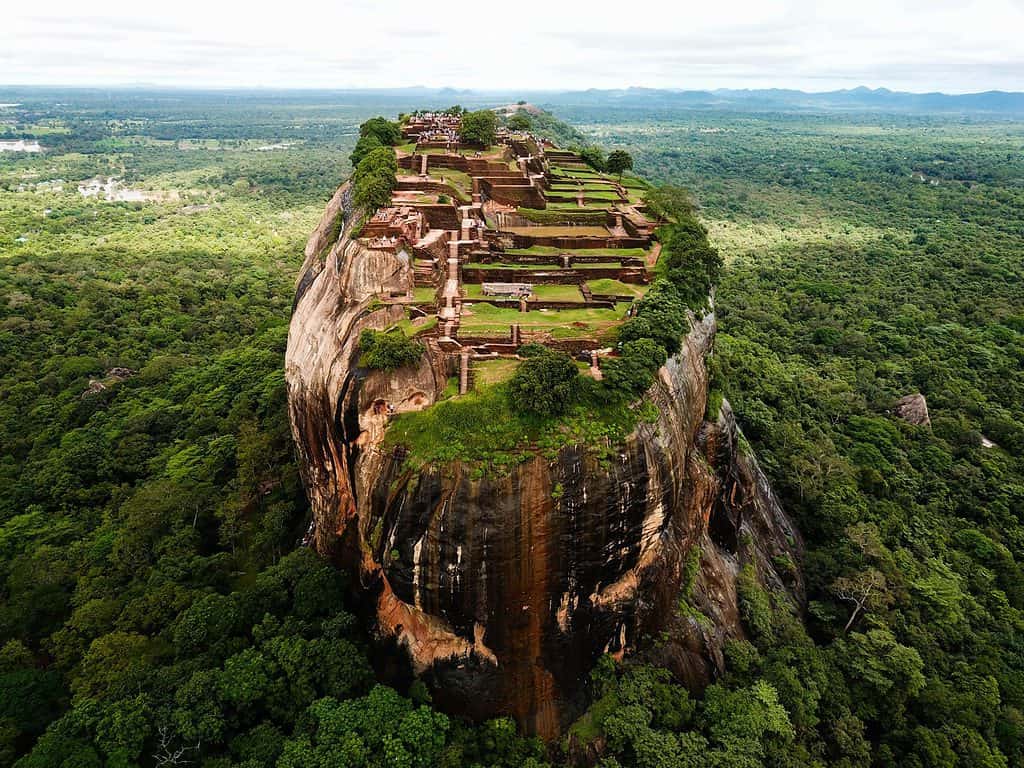
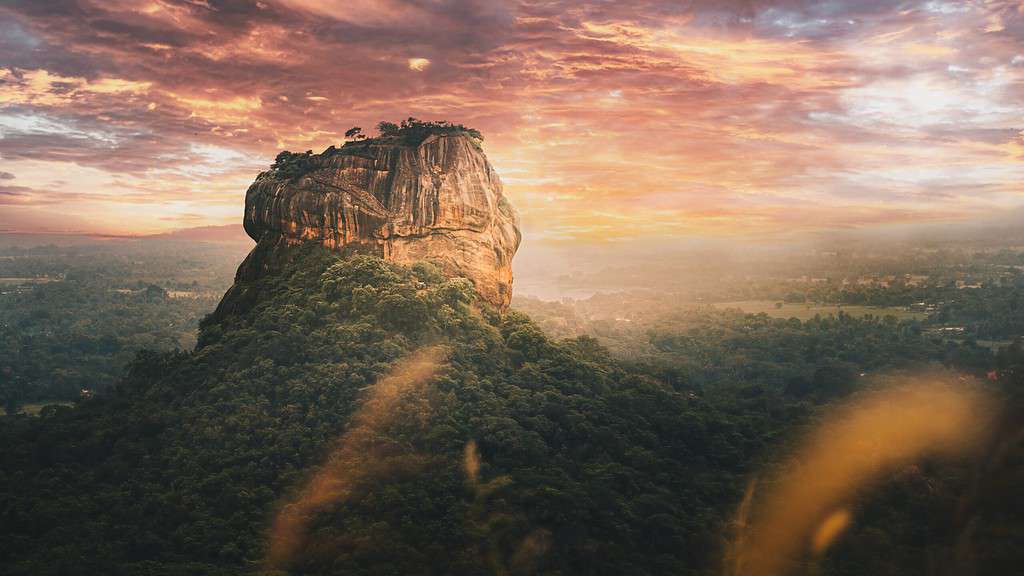
Without a doubt, Sigiriya is an impressive landmark. In fact, this naturally formed granite rock rises to an elevation of 1,144 feet above sea level and is some 600 feet above the surrounding plains. The beauty of this massive monolith rising from the jungle floor is truly jaw-dropping. Called “the eighth wonder of the world”, this is a “must-see” attraction in Sri Lanka.
2. Hike Sigiriya Rock to Learn About Its History
As you hike up Sigiriya, you will learn about its fascinating history. Archaeological evidence, rock inscriptions, and skeletal remains suggest that the area of Sigiriya was inhabited in prehistoric times, as early as the Mesolithic Period. Findings also suggest the area was inhabited by Buddhist monks in the 3rd century BC.
Yet, the tragic beginnings of the kingdom of Sigiriya began in the early 5th century. In 477 AD, King Kashyapa I fled to Sigiriya after unrightfully seizing the throne from his brother Moggallana, and murdering his father King Dhatusena by sealing him inside of a wall.
Fearing retaliation for his actions, the ancient city of Sigiriya served as a protective fortress and palace to King Kashyapa I between 477-495. In addition, Sigiriya served as the Sri Lankan capital after it was moved from Anuradhapura.
The tale of Kashyapa I ends in karmic tragedy. He eventually committed suicide when Moggallana’s armies invaded. Following his death, the palace was abandoned and the capital returned to Anuradhapura. It was used as a monastery until the 14th century.
Over the centuries, Sigiriya was all but lost to the jungle. It wasn’t until 1831, when archaeologist Jonathan Forbes rediscovered the lost city of Sigiriya. British mountaineers reached the summit in 1851, revealing the frescoes of Sigiriya. Excavations of the site began in the 1890’s and continue today.

3. Experience Remarkable Urban Planning When You Are Climbing Sigiriya Rock
Sigiriya gardens are not only the best-preserved water gardens in South Asia but some of the oldest landscaped gardens in the world. It is a masterpiece of ancient urban planning and irrigation. As it rained, water collected in reservoirs. Then it was pumped with hydraulics and gravity to operate water fountains. The advanced engineering systems far exceeded what was to be expected of the period in history. Unbelievably, some fountains remain functional to this day.
Sigiriya is “a unique concentration of 5th century urban planning architecture, gardening, engineering, hydraulic technology and art, centered on a massive rock, rising 200 meters above the surrounding plains”. -Dr. Bandaranayaka
dailynews.lk
4. Sigiriya Is a Popular UNESCO World Heritage Site
Sigiriya Rock is one of Sri Lanka’s most popular attractions. Lions rock was designated a UNESCO World Heritage Site in 1982 and it is one of only eight UNESCO designated sites in Sri Lanka. The popularity of Sigiriya is continuing to increase as Sri Lanka tourism recovers. Over one million tourists visit Sigiriya each year!
Click here for an Amazing Tour of Sigiriya Rock Fortress!
How Do You Climb Sigiriya?
Sigiriya has several unique features to explore during your climb up to the top. Keep reading to learn more!
Seeking Stamps Tip: Make sure to purchase your ticket and use the bathroom before you start.
1. First Explore Sigiriya Water Gardens
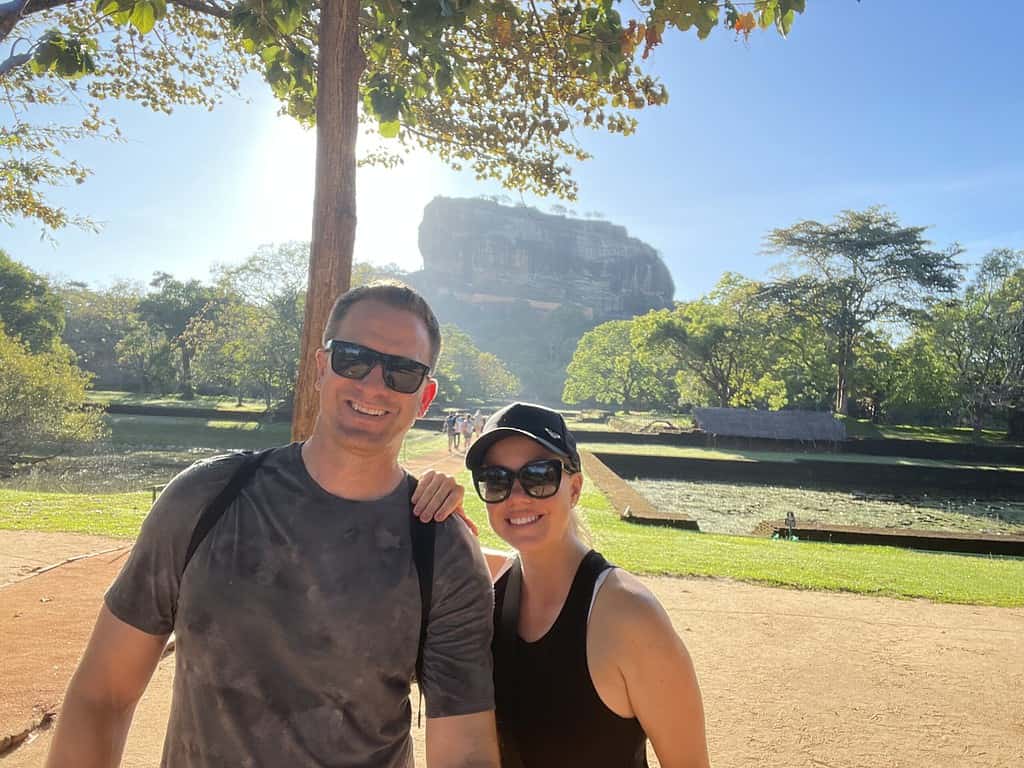
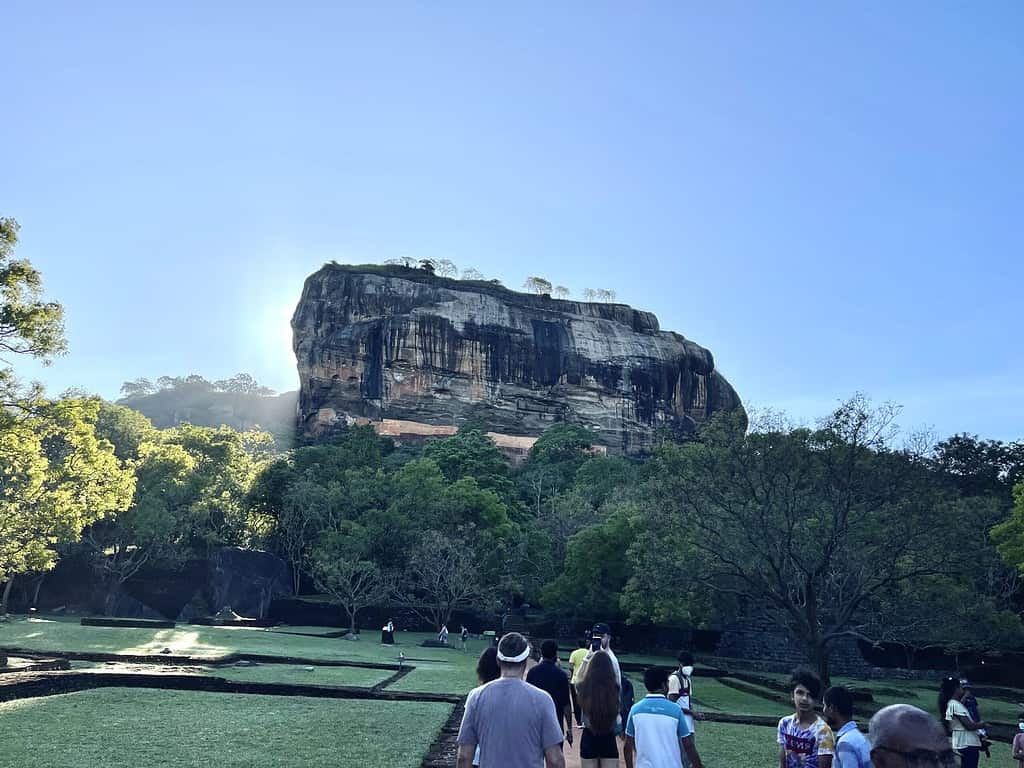
As you enter the complex, journey down the gravel path through the Sigiriya water gardens. The area is symmetrical with organized water gardens, fountains, and manicured lawns. During your tour, learn how the king and his concubines used these pools at his “pleasure palace”. Walking through this area is quite serene and large trees offer a brief respite in the shade.
2. Next Walk Through the Boulder Gardens of Sigiriya
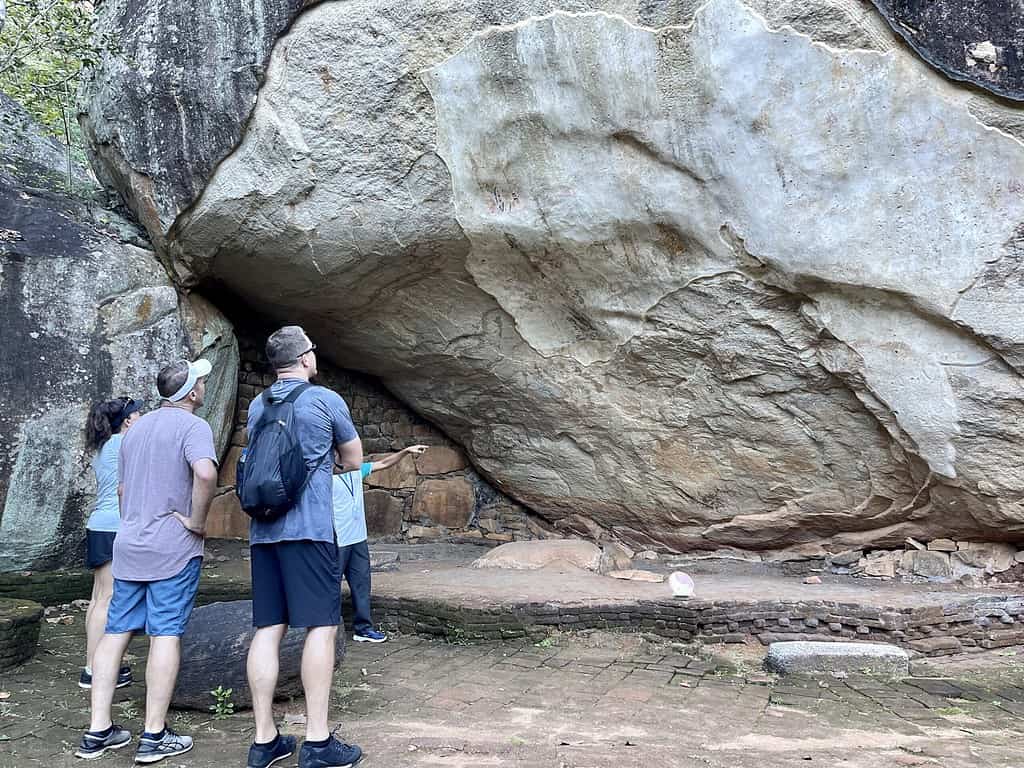
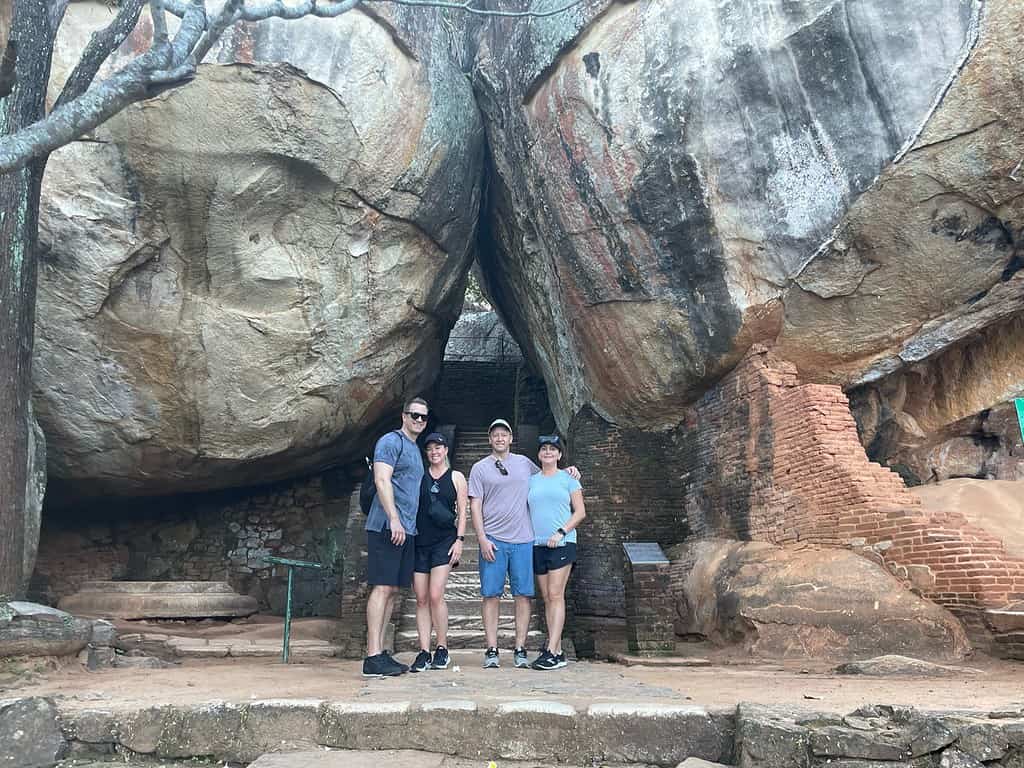
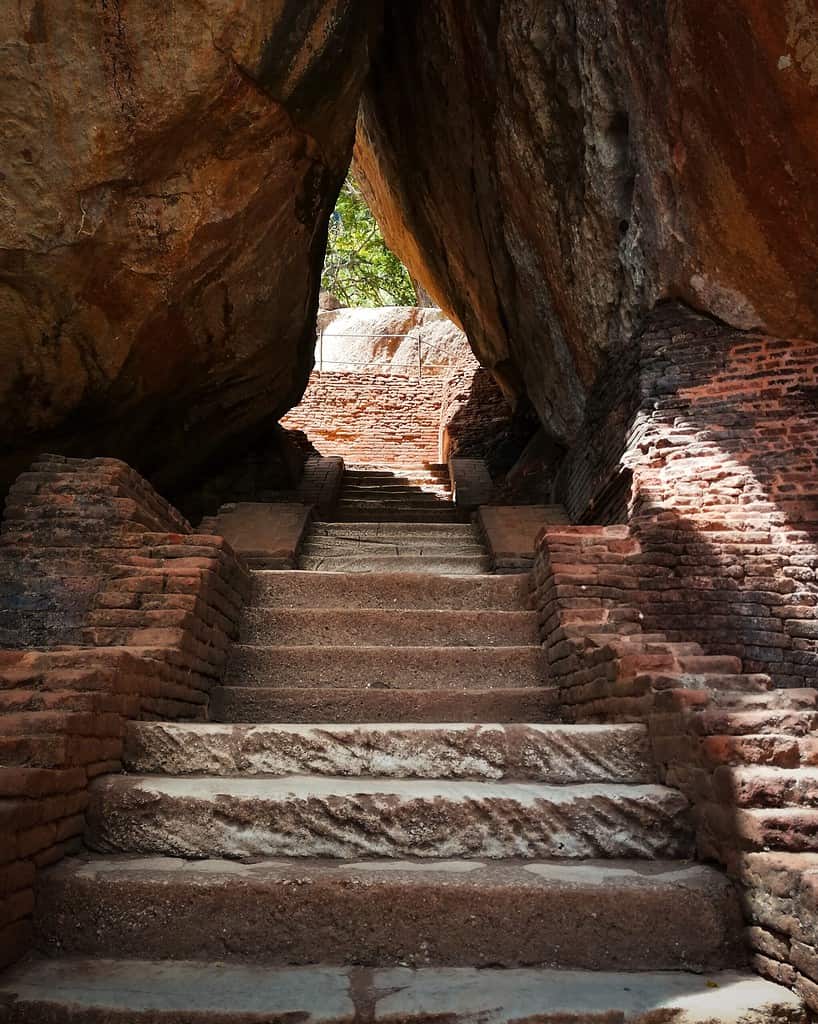
After you pass through the water gardens you reach the boulder garden. This is an area characterized by rocks of all shapes and sizes in frenzied arrangements. Pass through massive rock tunnels as you weave your way to the lion’s paws. Some of the boulders are enormous!
Seeking Stamps Tip: Keep an eye out for Cobra Head Rock on your way . . .
3. Admire the Lion’s Rock Terrace Gardens
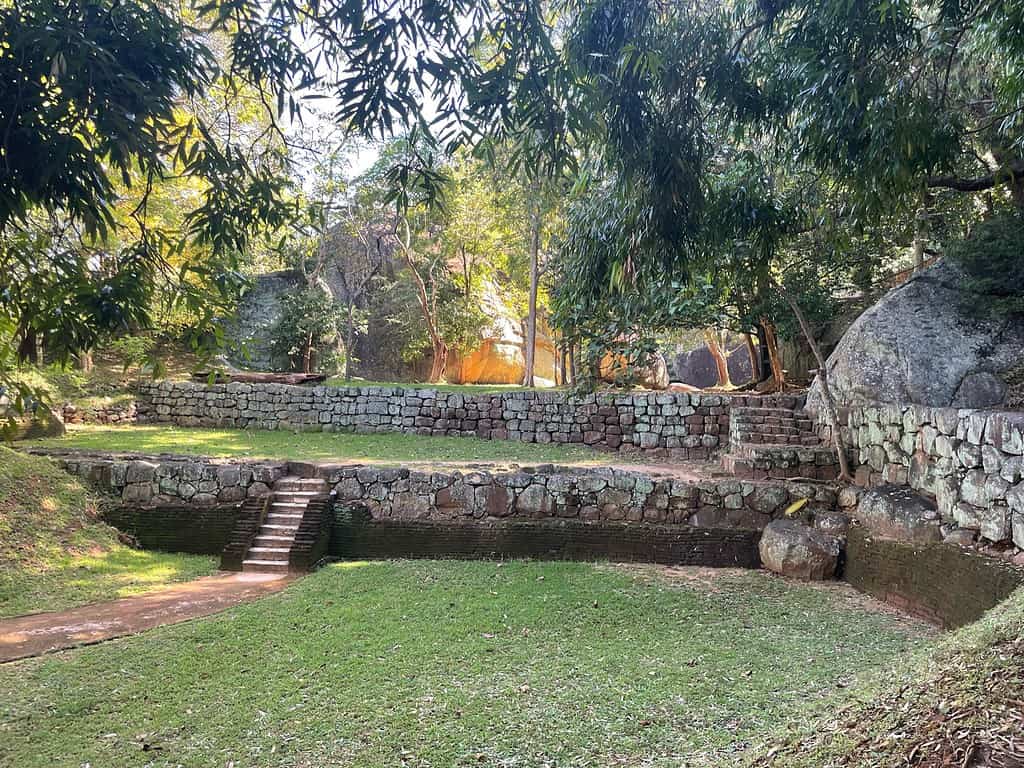
Once you approach the base of the Lion’s Rock, you will see organized terraced gardens built into the hillside.
4. Approach the Mid Level Terrace With the Lion’s Paw Entrance
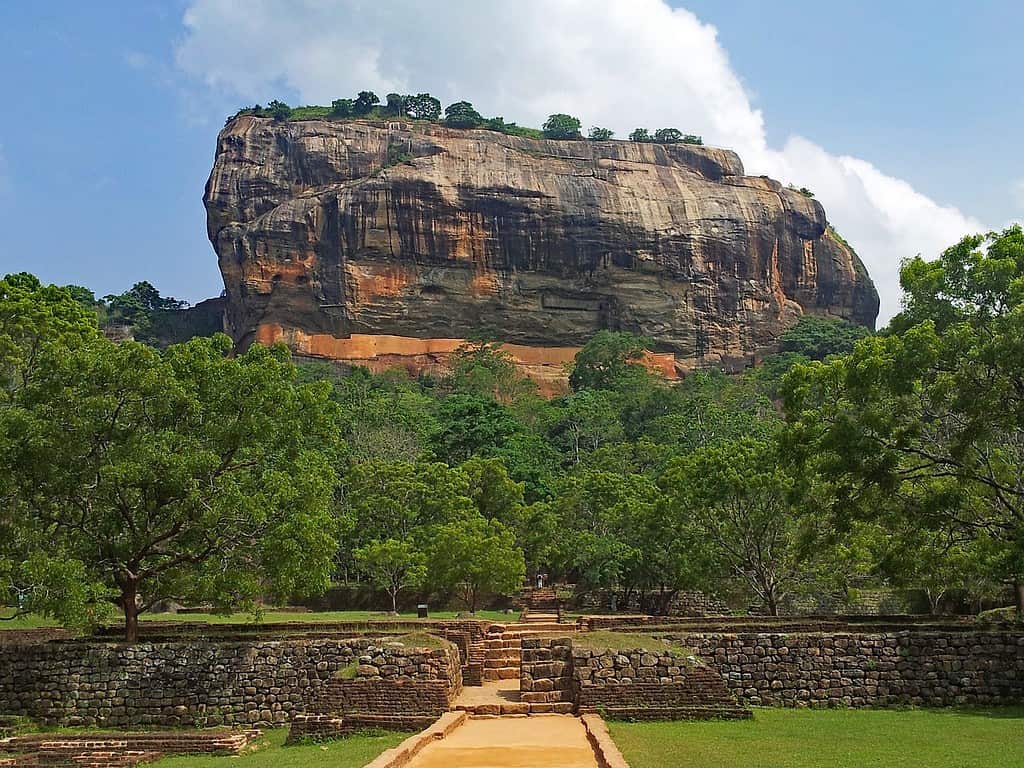
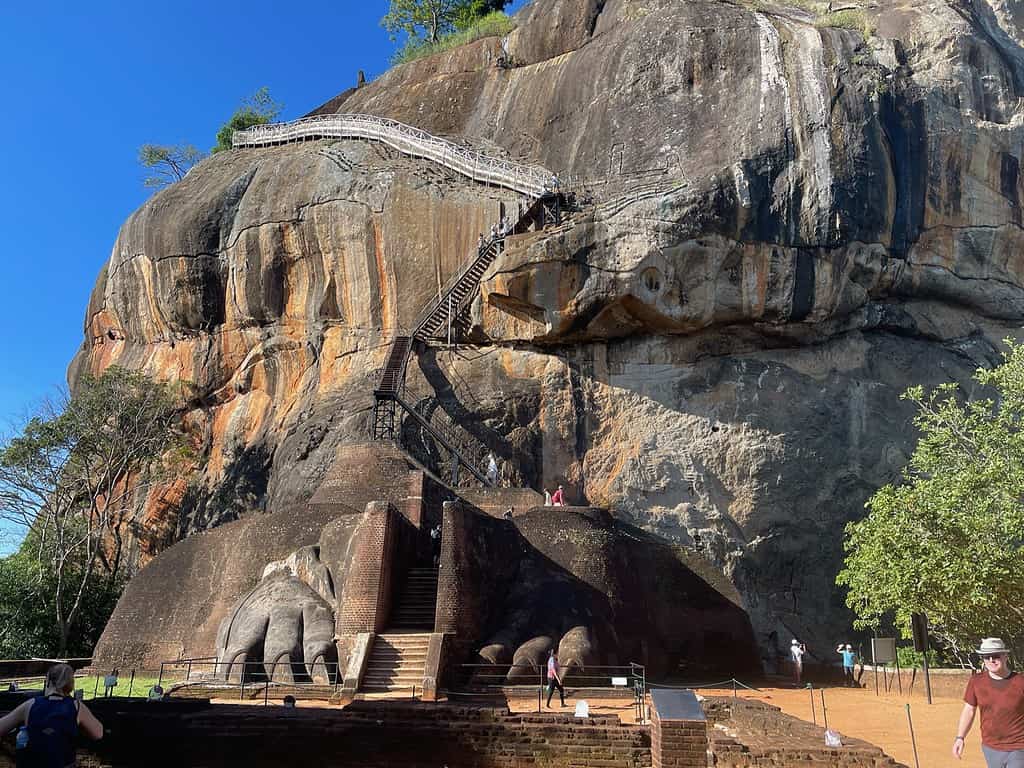
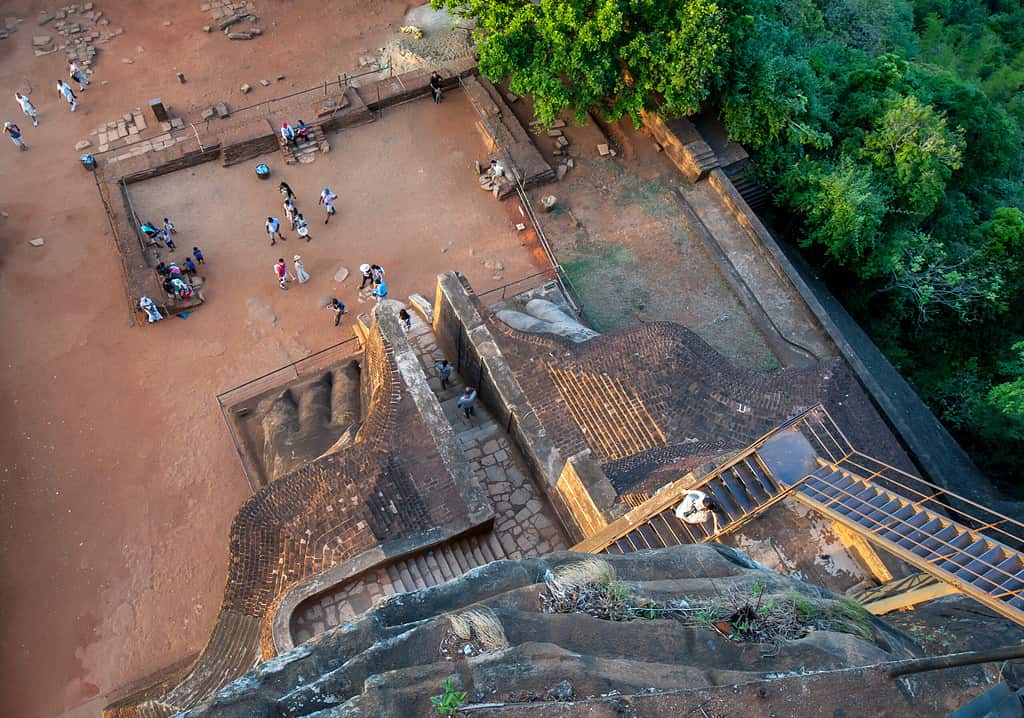
Next, make your way to the most exciting part of the experience. The namesake of Sigiriya translated in Sinhalese, means “lion rock.” At the base of the stairs, you will face the giant lion’s paws and see why Sigiriya is aptly called Lion’s Rock or Lion Mountain.
Today, all that remains of the lion gate is the two massive paws. However, it is believed that there used to be a huge lion head carved from rock 14 metres (45 feet) in height.
The most difficult part of the hike is about to begin. To be honest, the stairs above you look very daunting when you realize just how far up you have to climb! Yet, the view from the bottom doesn’t give an accurate picture of how grueling the march will feel.
Seeking Stamps Tip: The lion is an important symbol in Sri Lanka that you will see throughout the country.

5. Climb Sigiriya Steps to the Sky Palace
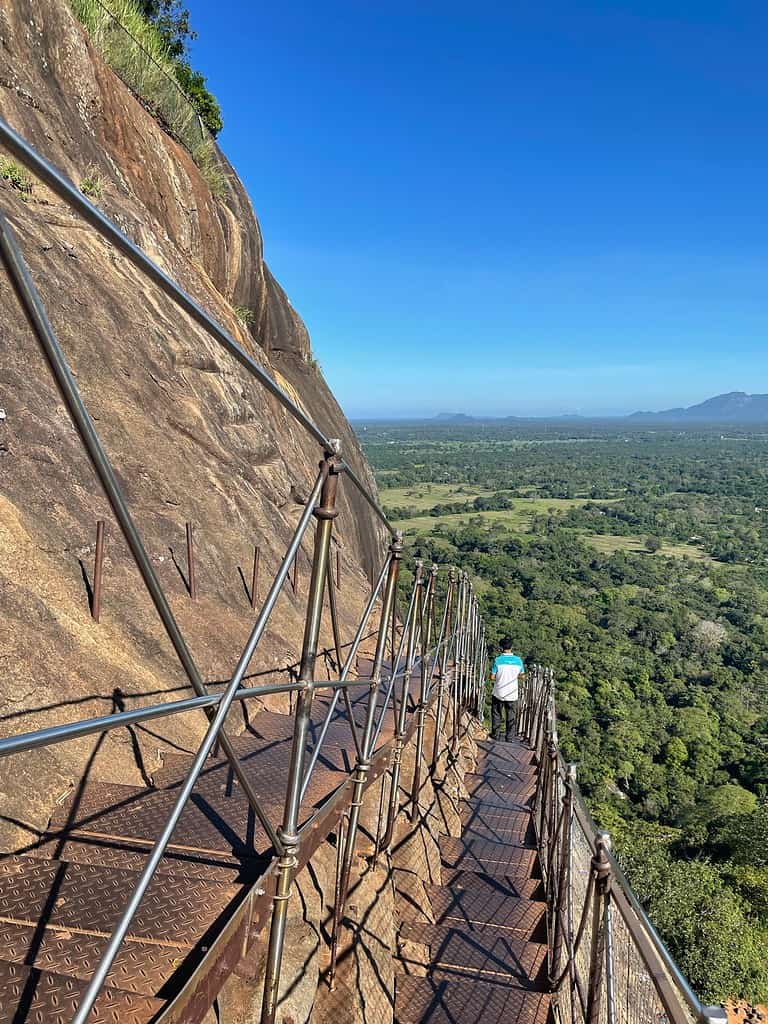
Between the heat, humidity and incline, the climb up the stairs at Sigiriya takes serious effort. In total, there are 1200 steps at Sigiriya. For clarification, not all 1200 stairs are the steep ones up the face of Lion’ s Rock Fortress.
We lucked out when we visited and the site was not crowded. However if you go during peak travel times, you may have queues down the entire staircase.
6. View the Landscape From Sigiriya Citadel and the Summit of the Palace
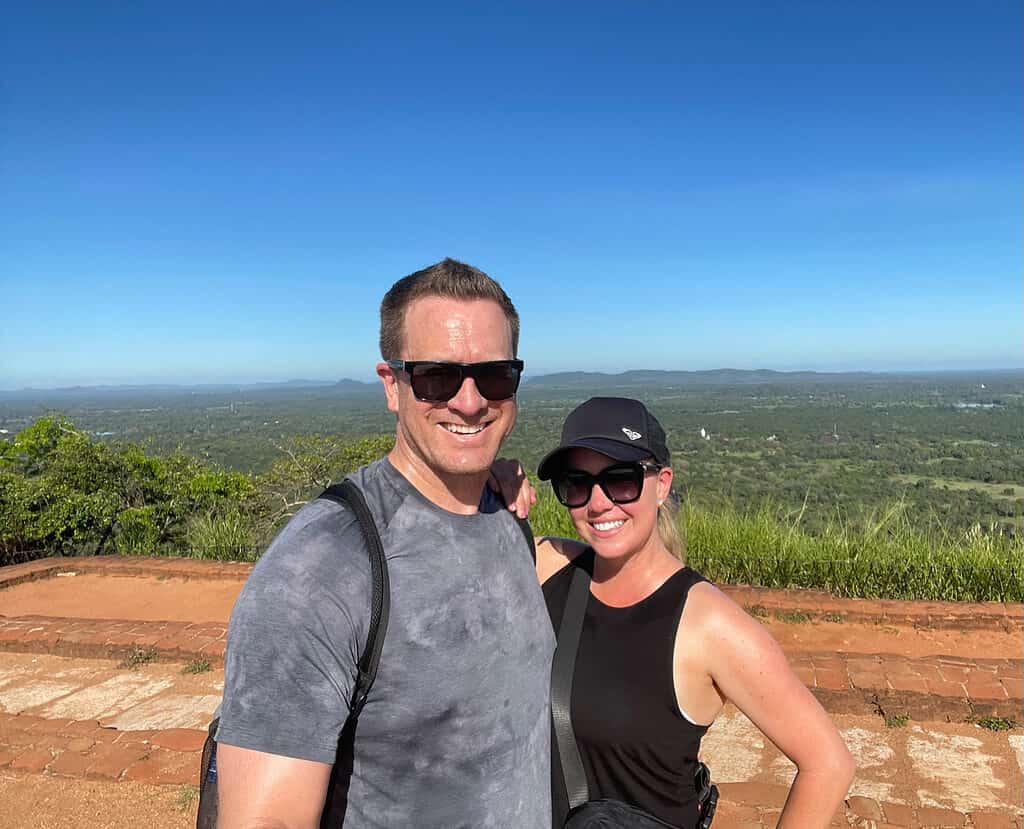
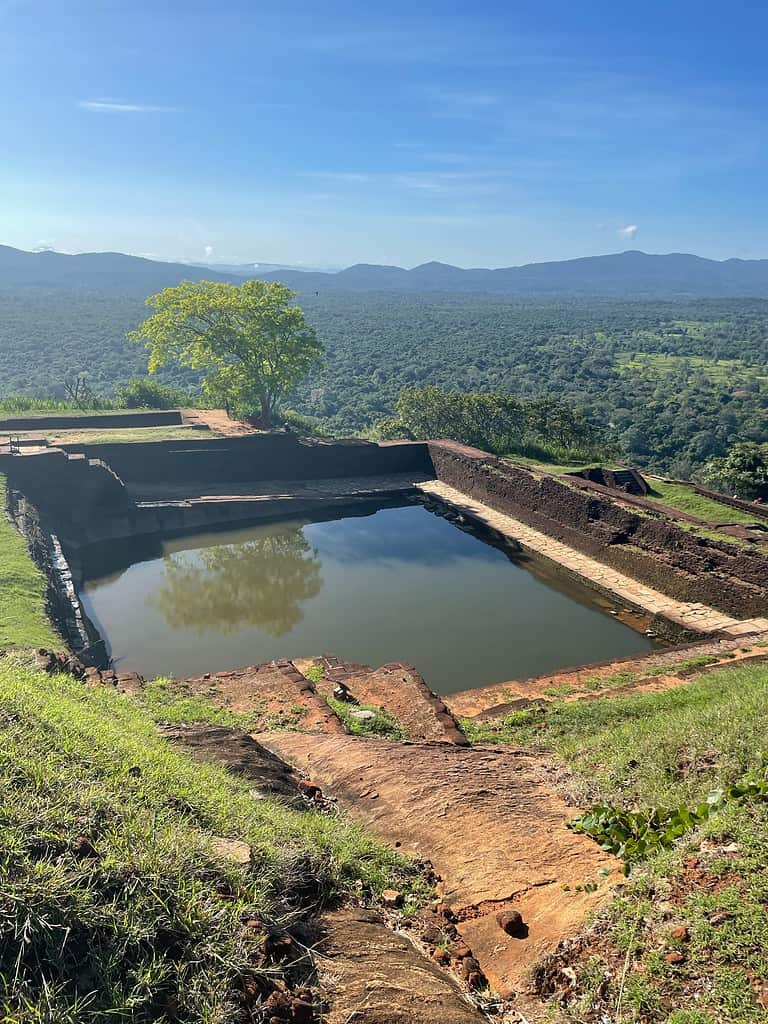
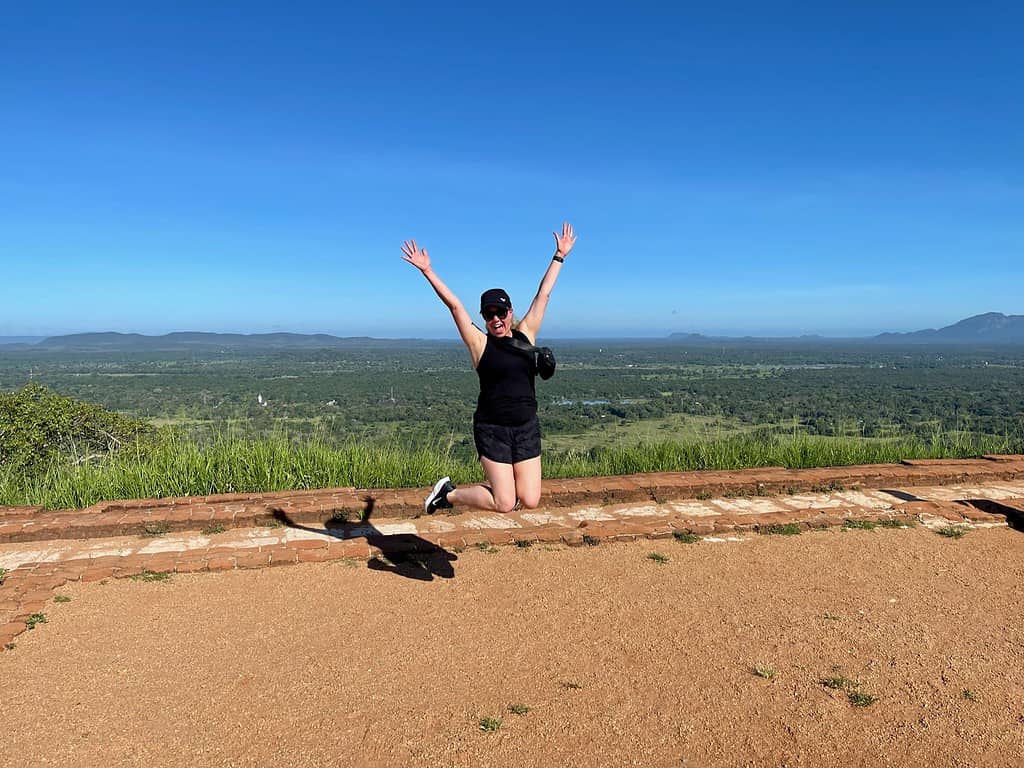
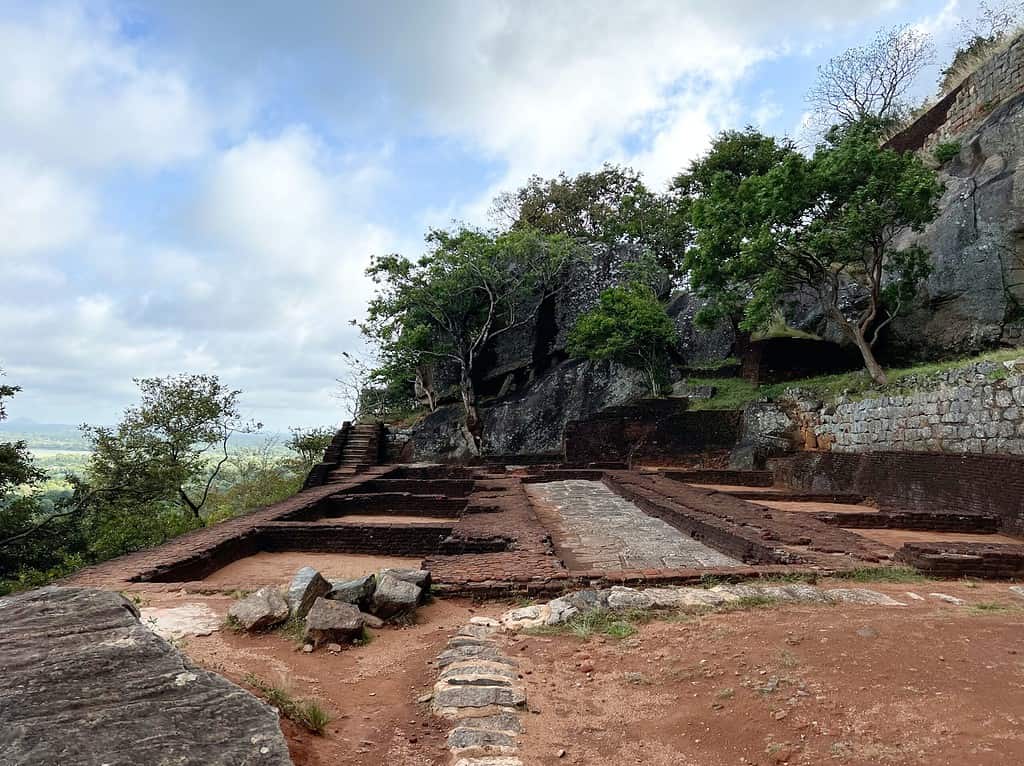
Once you reach the top of Sigiriya Rock, you will enjoy 360 degree panoramic views of the lush landscape. Make sure to admire the reservoir pools at the top. Imagining how the palace was built years ago makes you realize what a feat it must have been to construct.
7. Check Out the Mirror Wall of Lion Rock Fortress
Next, walk along the mirror wall. While the area is no longer reflective, this was once highly polished so King Kashyapa could admire himself in it.
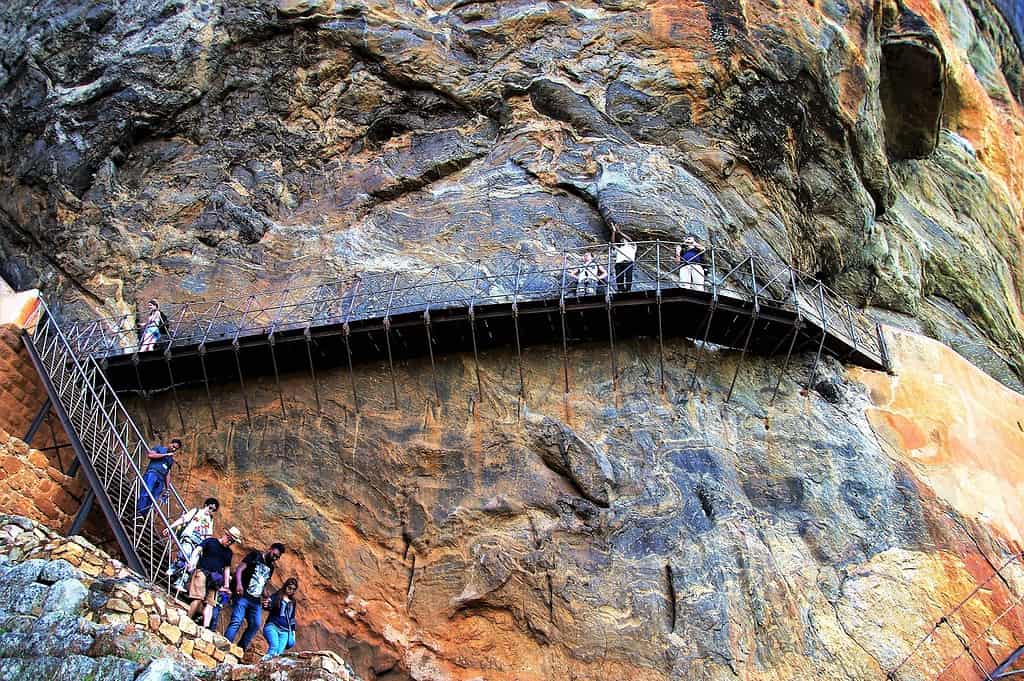
8. View the Beautiful Sigiriya Frescoes
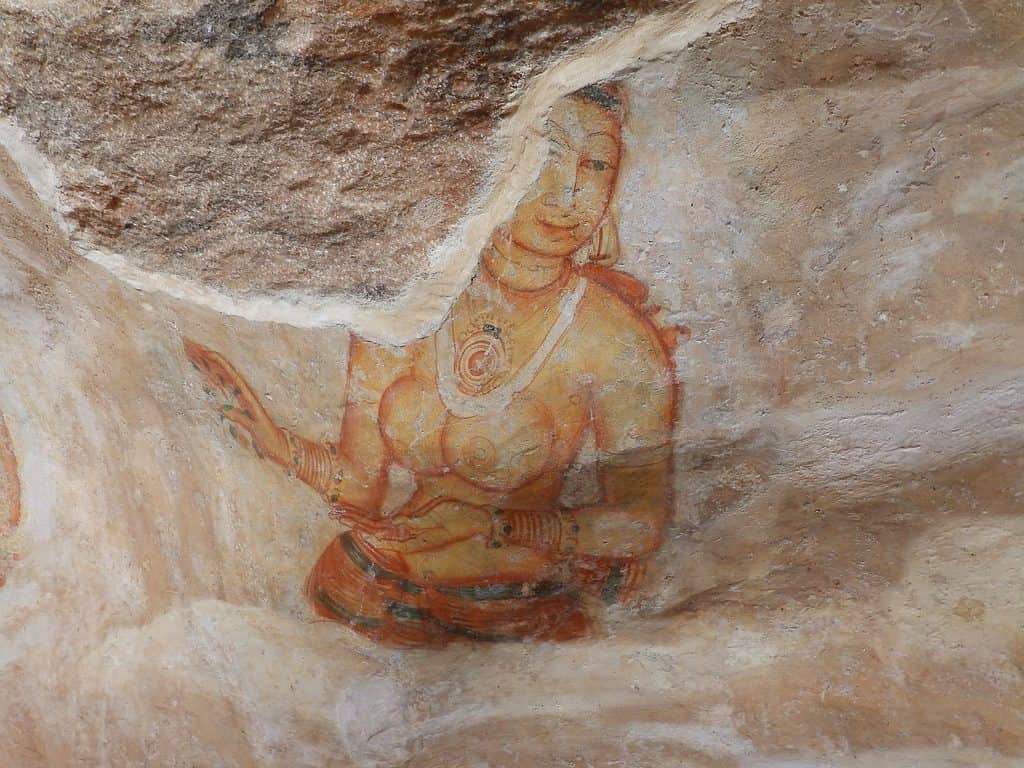
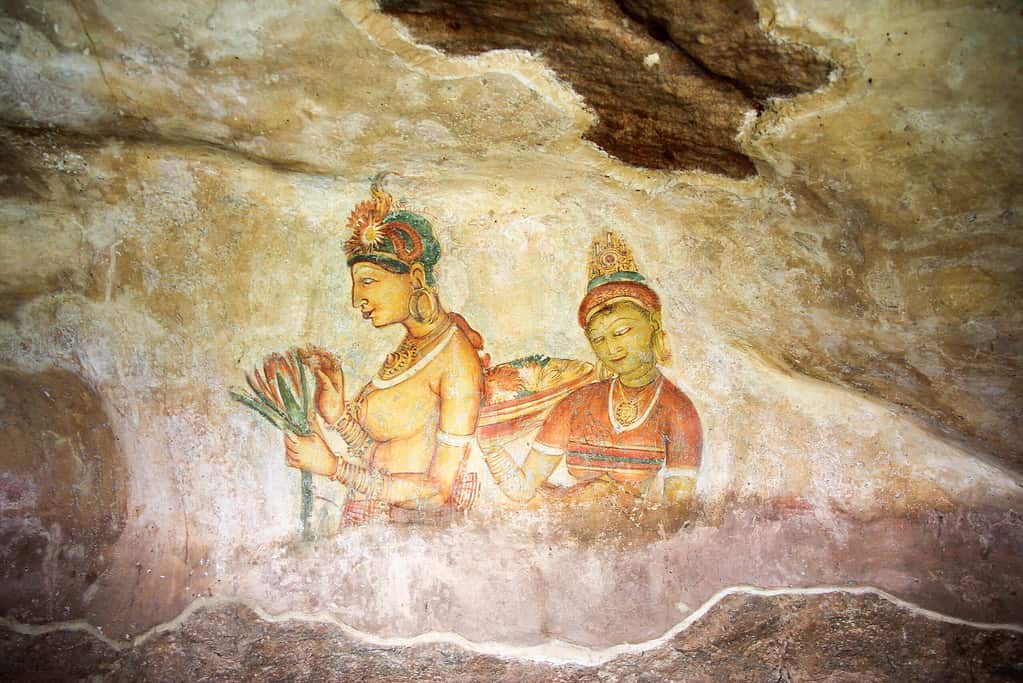
Then cross a ramshackle wood floor to view the stunning frescoes of Sigiriya. They include twenty one paintings of beautiful women known as “the maidens of the clouds“. The identity of the painted women is unknown. However, they are believed to be images of women from Kashyapa’s harem or depictions of apsaras, singers and dancers in Indian mythology who inhabit heaven.
Sadly, the frescoes at Sigiriya were badly damaged by vandalism in 1967. Green paint defaced the murals and objects were used to chip away portions of the artwork. Some of the damage is still visible today.
Seeking Stamps Tip: Photos and videos are not allowed of the Sigiriya frescoes.
9. End Your Sigiriya Climb as You Make Your Way Down the Spiral Staircase
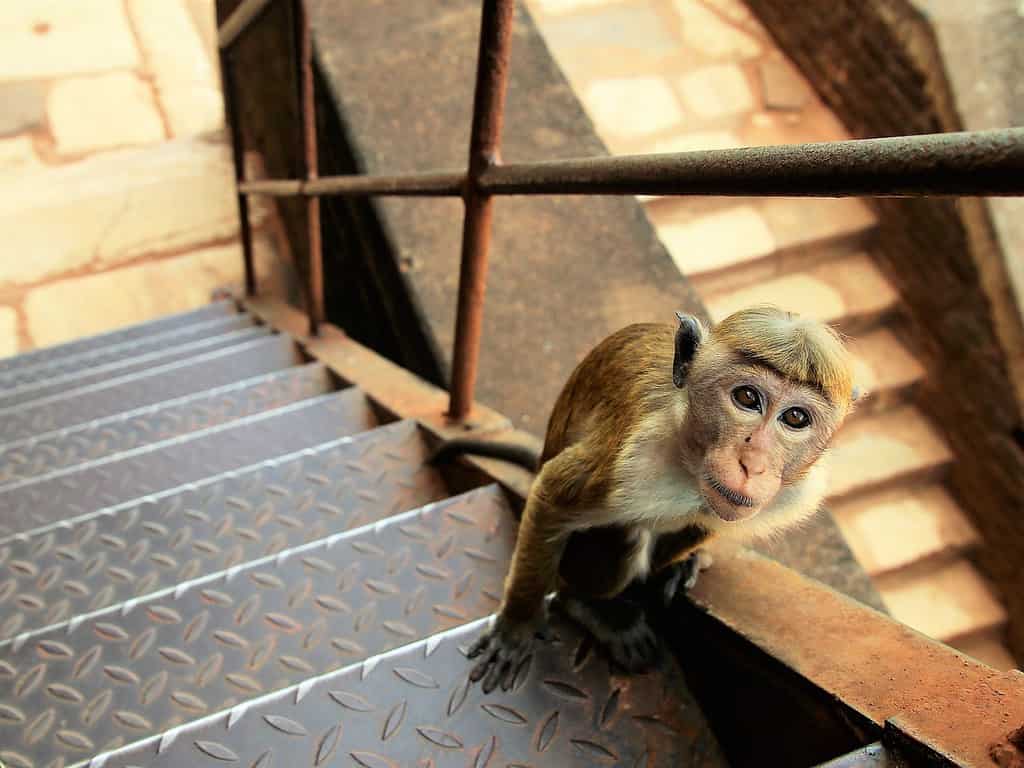
Finally, make your way down a very rusty and rickety spiral staircase. I’m not going to lie, the weathered metal made us feel very apprehensive on the steep climb down.
Seeking Stamps Tip: You can view the frescos and mirror wall first, if you choose. I recommend reaching the top and viewing them on the way down as the temperatures rise during the day.
Sigiriya Visitor Information
For the most up to date visitors information, visit the Sigiriya Rock Fortress Website. You can purchase your ticket online before you arrive. Make sure to bring cash (LKR’s) for your ticket. Credit cards are not accepted. There is an ATM on site, but it can be unreliable.
Sigiriya Fortress Opening Hours:
- 6:30 am- 5:30 pm Daily (last entrance is 4:00 pm)
Sigiriya Rock Ticket Price:
Foreign Nationals Admission:
- Adults 12 and older $30 (Includes the Sigiriya Rock hike and museum)
- Children 6-12 $15
- Children under 6 FREE
- Museum visit only (without climbing) $5 for adults
Sri Lanka Nationals Admission:
- Local Adults Rs 100 ($1)
- Local Children Rs 50 ($0.50)
The Cost to Climb Sigiriya
For some travelers, the admission price of Sigiriya is controversial. It’s true that locals pay less than tourists to view the attraction. However, keep in mind the difference in the average annual salary for Sri Lanka compared to the US. An average monthly salary in Sri Lanka after taxes was $154 compared to $4223 in the US. Also remember, entrance fees help preserve this amazing attraction.
Seeking Stamps Tip: Compared to other tourist attractions, Lion Rock in Sigiriya is expensive. However, if Sigiriya is too costly for your budget, do the adjacent Pidurangala Rock hike. It costs $3 USD to climb Pidurangala and offers stunning views of Sigiriya.
The Best Month to Climb Sigiriya
Fortunately, Sri Lanka Is a year round travel destination. As a whole, Sri Lanka’s peak travel season is December to mid-April. Plan your itinerary with consideration of Sri Lanka’s two distinct monsoons.
- Western Sri Lanka has the most precipitation during the Yala Monsoon April-September. April, May and June are the wettest months.
- The milder Maha Monsoon hits eastern Sri Lanka between November to March, with peak rainfall from November to December.
Sigiriya weather is ideal during the months of mid December to March. Sigiriya has the hottest temperatures from March to May, with highs hovering in the 80’s Fahrenheit. When combined with humidity, the heat can feel oppressive. Our sunglasses and camera fogged up the second we stepped outside during our visit! Check the local Sigiriya weather report before you travel to Sigiriya.
Weather Averages at Sigiriya Rock:
- Hottest Month: May (average temperature 80.7 degrees F)
- Coldest Month: January (average temperature 74.2 degrees F)
- Driest Month: June (0.8 inches of rainfall)
- Wettest Month: November (8.9 inches average rainfall)
- Months with the fewest Rainy Days: June, July, August (4 days)
- Months with Most Rainy Days (October, November, December)
How to Reach Sigiriya: Transportation to Climb Lions Rock
Sigiriya is a well connected attraction, and several modes of transportation provide routes to the city. Most travelers begin their journey from Colombo to Lion’s Rock at the airport. Colombo’s Bandaranaike International Airport (CMB), is the closest international airport to Sigiriya.
Colombo to Sigiriya by Car:
The driving distance from Colombo to Sigiriya is roughly 110 miles. Taxis and private drivers are the most comfortable and efficient way to reach Sigiriya from Colombo (for the price). It takes 3-4 hours to drive from Colombo to Sigiriya in a private car or taxi. Plan to spend approximately 23,000 LKR or $75 for this option.
Colombo to Sigiriya by Tuk Tuk:
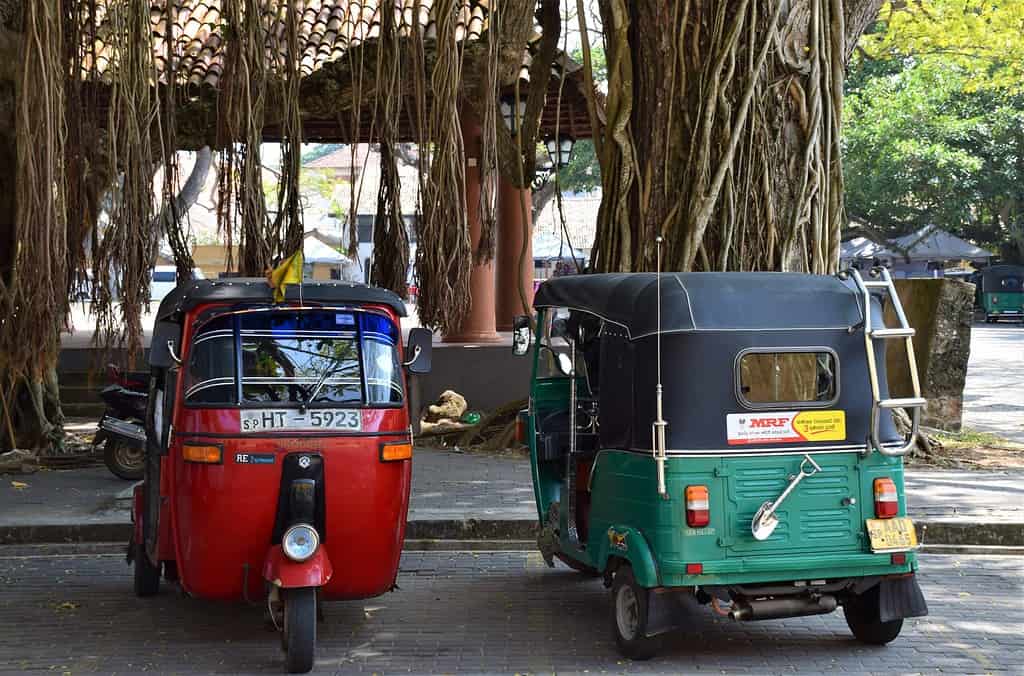
It is possible to travel from Colombo to Sigiriya via tuk tuk. Expect to pay about LKR 95/km or about $55 for the 4-5 hour journey. It is important to negotiate your price before you enter the tuk tuk to avoid being overcharged.
Colombo to Sigiriya by Bus:
Buses from Colombo to Sigiriya take 4-5.5 hours from Colombo to Sigiriya. They are slow and often crowded. However, buses are a cost effective mode of transportation to reach Lion’s Rock. From Colombo there are several routes you can choose. Bus # 15, #48 and #49 are all options. It costs about $10 for the trip.
Colombo to Sigiriya by Train:
To travel from Colombo to Sigiriya by train, you have to travel from Colombo to Habarana first. The train between cities only makes the trip once per day, so plan accordingly. Once you reach Habarana, take a taxi or tuk tuk to Sigiriya. Sigiriya is a little over 9 miles from the Habarana station. Trains from Colombo to Habarana Railway Station are the slowest way to reach Sigiriya. It takes 5-6 hours and costs between 520 Rs to 1100 Rs ($6-14).
Colombo To Sigiriya by Flight:
If budget is of no concern, Cinnamon Air has scheduled flights from Colombo to Sigiriya. The flight costs approximately $300, making it the most expensive mode of transportation. Yet, it’s the most time efficient choice and only takes 30 minutes!
How Long Does It Take to Climb Sigiriya?
It takes approximately 1.5 to 2 hours (round-trip) to climb Sigiriya. Factors such as crowds and your fitness level will influence how quickly you can ascend the stairs. Our group of 40ish year old adults took about 45 minutes to reach the top and 20 minutes to return to the bottom.
How Many Stairs Are at Sigiriya Rock in Sri Lanka?
In total there are 1200 stairs at Sigiriya. The steps at Sigiriya are spread out throughout the site. The stairs in the water garden and boulder garden are the easiest to navigate. Once you reach the lion’s paw entrance, that is when the stairs become very challenging.
How Difficult Is the Climb to the Top of Sigiriya?
If you can climb several flights of stairs, you can make it to the top of Sigiriya Rock in Sri Lanka. It is moderately physically demanding, but you can stop and rest if needed.
Seeking Stamps Tip: On our way up the steepest portion of Lion Rock Sigiriya, we saw a couple making their ascent. The female required a wheelchair and her partner carried her up the entire staircase. I was so moved by this act of love, it brought me to tears! He was very physically fit, so I don’t recommend that plan for the majority of us. But WOW!
What to Wear While Climbing Sigiriya
There are no clothing restrictions when you climb Sigiriya. Lion’s Rock is not a temple and you do not need to cover your shoulders or knees. It is perfectly acceptable to wear shorts or athletic attire. Cool, comfortable, sweat-wicking fabrics are best. Comfortable walking shoes with sturdy tread are recommended.
What to Bring When You Climb Lion’s Rock Sigiriya
The Sigiriya Rock climb is exhausting and hot. There are a few areas with shade, but most of the journey up the steps at Sigiriya is in the sweltering sun. Facilities are very limited, with only a few vendors selling snacks and drinks. You will want to bring:
- plenty of bottled water
- wet-wipes
- snacks
- hat
- sunglasses
- umbrella for shade
- flashlight or headlamp for evening climbing
The Best Time of Day to Climb Sigiriya Rock Fortress
It can get extremely crowded at Lions Rock. The last thing you want to do is stand in a long queue in the blistering sun. When you climb Sigiriya, visit first thing in the morning or later in the afternoon. We arrived when Sigiriya opened, and we were thankful it was a bit cooler when we made the climb.
If you are climbing Sigiriya in the late afternoon you can see the brilliant sunset. Remember to bring a flashlight because it will be dark on the return journey.
Is It Dangerous to Climb Sigiriya?
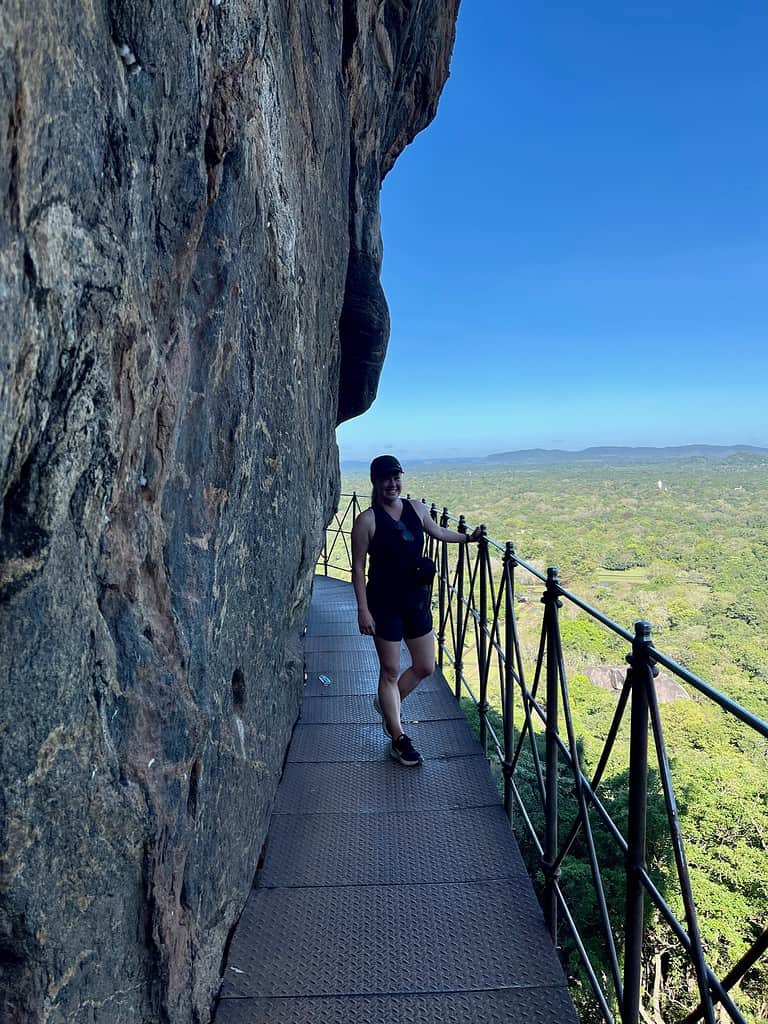
The Sigiriya climb felt very safe. Sigiriya stairs are steep, but they have sufficient rails for safety. However, there are no railings to prevent falls at the top of the citadel. Obviously, due to Sigiriya’s height, use caution and good judgment. Stay away from the edges and be mindful when taking photos.
Things to Avoid During Your Sigiriya Climb
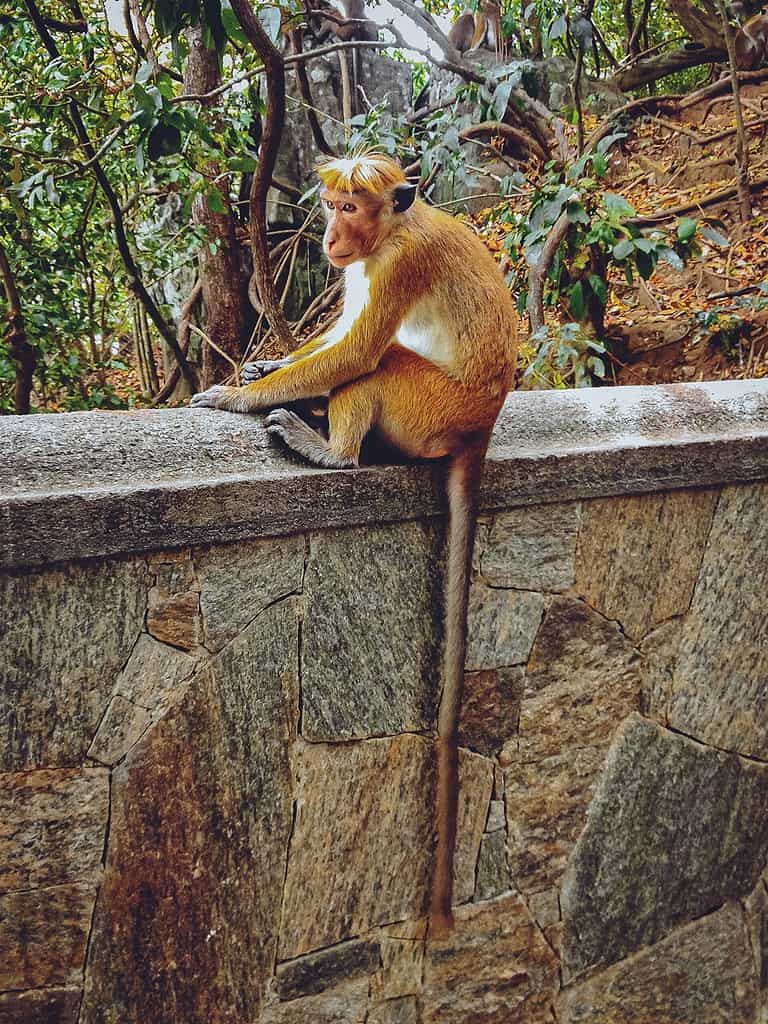
- Do NOT feed the animals
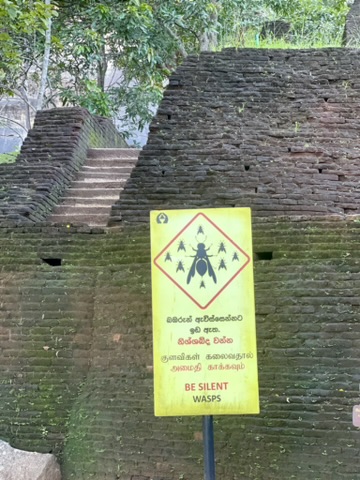
- Do NOT disturb the wasps with loud talking or screaming
- Drones are NOT allowed
- Do NOT climb on off-limit areas
- Do NOT take photos or video of Sigiriya frescoes
How Many Days Do You Need to Climb Sigiriya Rock?
While it is possible to climb Sigiriya on a day trip from Kandy, I recommend that you spend some time in the village of Sigiriya. After we visited Sigiriya Rock, we retreated to our hotel pool with cocktails.
While in Matale, make sure to do an elephant safari, visit Polonnaruwa or take a day trip to Dambulla. If you are short on time you can come for the day and continue on to the next city in your Sri Lanka itinerary.
Are you visiting the Maldives after Sri Lanka? Read more in this blog post!
Where to Stay Near Sigiriya Rock
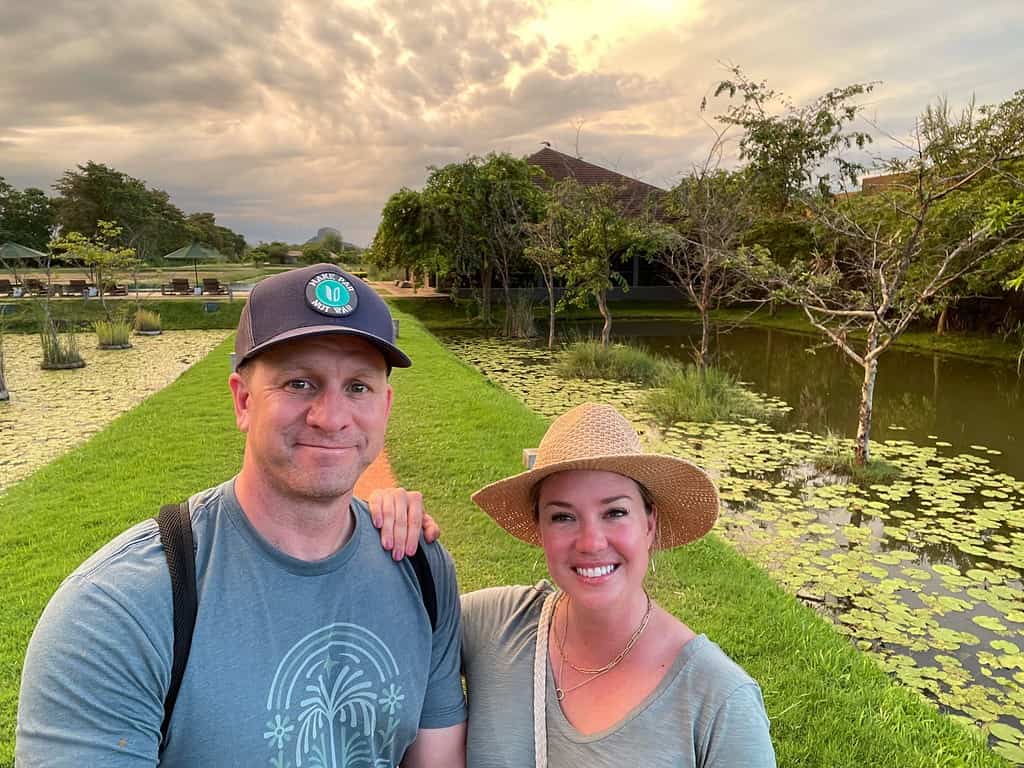
When you visit Sigiriya town, there are accommodations from budget hotels to luxurious resorts. It is convenient to stay in Habarana, Dambulla or the town of Sigiriya. We stayed in Sigiriya village, because we liked its proximity to Lion’s Rock.
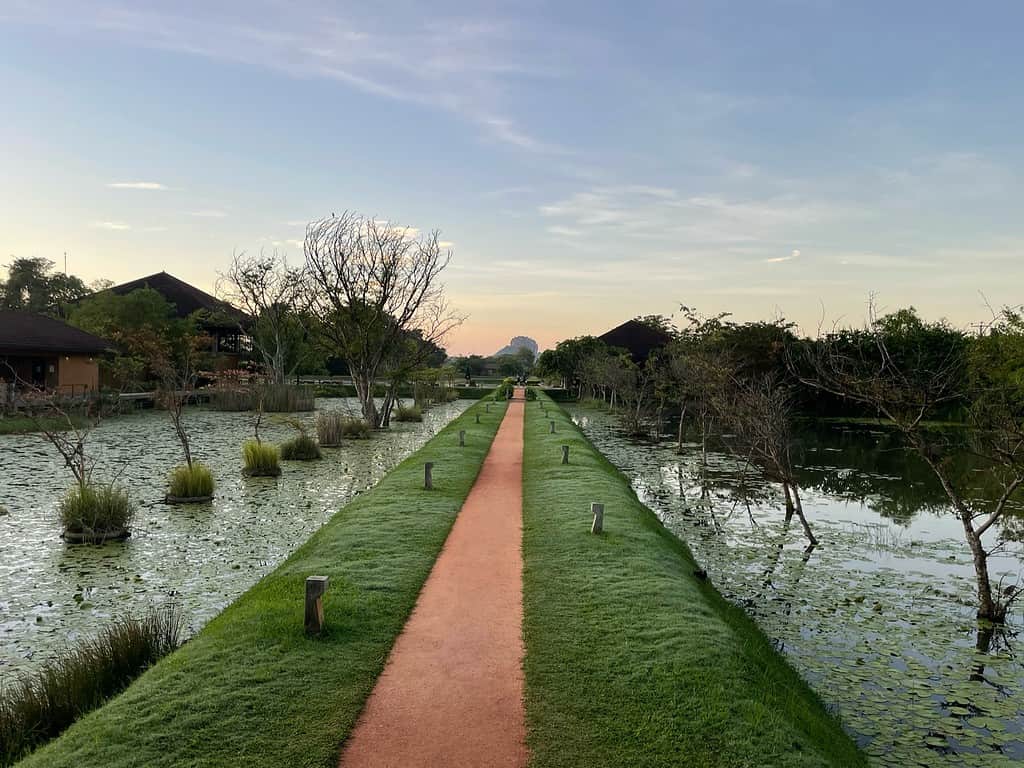
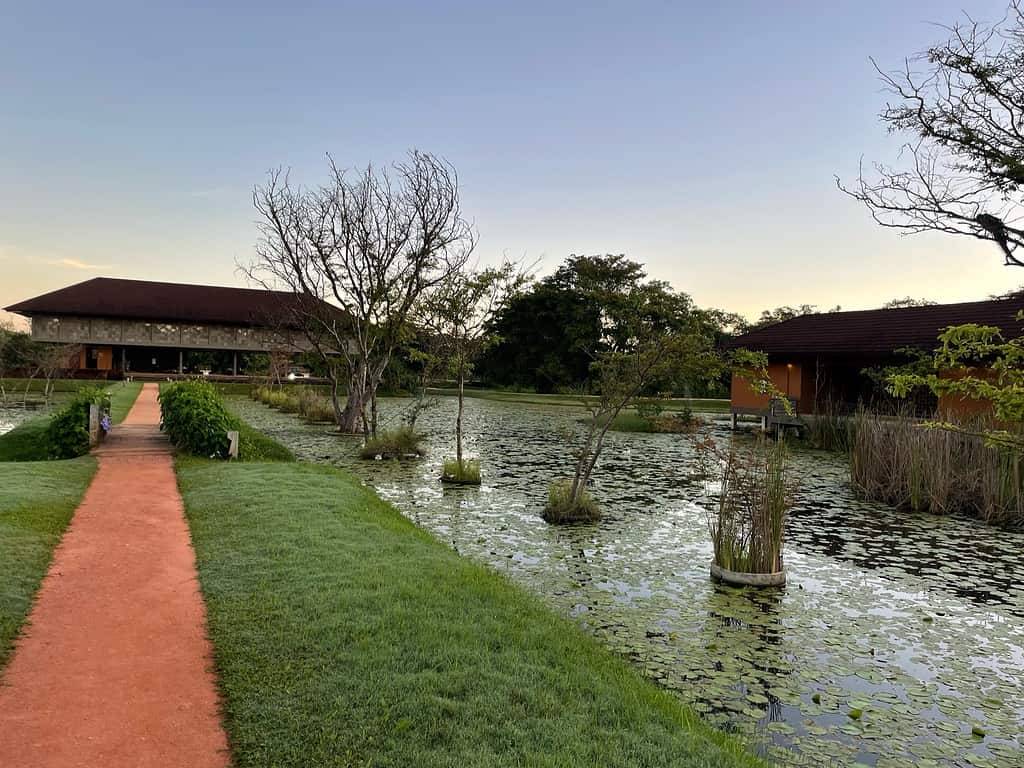
We chose to stay at 5-star Water Garden Sigiriya. Water Garden is a serene resort offering gorgeous views of Lion’s Rock in the distance. The property is surrounded by wildlife including peacocks, frogs, lizards and elephants. We even had a water monitor swimming in our pool-yikes!
For a spacious option, I recommend the superior deluxe villas with private plunge pools. They are a roomy 1,200 square feet of space with a living space, bedroom and large bathroom.
At Water Garden Sigiriya, you don’t have to leave the property for meals. For amazing Sri Lankan food, dine at the luxurious hotel restaurant. Enjoy cocktails at the Twin Level Bar after you climb Sigiriya Rock.
Seeking Stamps Tip:If you are traveling with small children, note that the hotel is surrounded by water. Golf cart buggies are also available to transport you to/from the villas.
Lion’s Rock Climb: FAQ
1. What Is the Height of Sigiriya?
In the literature, the height of Sigiriya ranges from 590-660 feet tall. The Sigiriya Fortress website states “Sigiriya is 660 feet tall”.
2. Is Sigiriya, Sri Lanka One of the Seven Wonders of the World?
Sigiriya is not one of the official 7 wonders of the world. It is affectionately called the “the 8th wonder of the world” by Sri Lankan locals.
3. Why Was Sigiriya Abandoned?
After King Kasyapa I was defeated, the capital of Sri Lanka returned to Anuradhapura. Sigiriya Rock Fortress became a buddhist monastery and was then abandoned until the 14th century.
4. Who Discovered Sigiriya Rock?
It is unknown who first discovered Sigiriya in prehistoric times. In 1831, Sigiriya Rock was re-discovered by British Army Major Jonathan Forbes.
5. Do You Need a Guide For Climbing Sigiriya?
A guide is not necessary to tour Sigiriya Rock Fortress. Utilizing a tour guide will enhance your understanding of the history, architecture, and significance of the site.
6. Can You Climb Sigiriya Sri Lanka In the Rain?
You can climb Sigiriya in the rain. Avoid making the trek if there is lightning, as you have to spend a significant amount of time on metal stairs.
7. Is Sigiriya Man Made?
Sigiriya Rock is a naturally occuring volcanic rock. The gardens, terraces, and palaces are man-made structures built on top of the massive boulder.
8. What Is Inside Sigiriya Rock Sri Lanka?
Sigiriya Rock is a massive, solid granite boulder. You do not visit the inside of the rock. Surrounding the monolith are man-made water gardens and terraces. Tourists pass by the lion’s paw gate and climb stairs to see and palace ruins on citadel of Sigiriya Rock.
9. Can Kids Climb the Rock Fortress of Sigiriya?
Children can climb Sigiriya Rock. It is physically challenging with many uneven steps. The recommended age for children at Sigiriya is 6 and up. The area is not accessible for strollers.
10. Is Sigiriya Called Lion’s Rock Because There Are Lions Nearby?
Sigiriya is called Lion’s Rock because of the large lion paws near the entrance. Lions cannot be found near Sigiriya and are extinct in Sri Lanka.
11. What Is on Top of Lions Rock Sigiriya?
On top of Sigiriya you can see 360 panoramic views and ruins of the former palace.
12. Can You Climb Sigiriya Rock If You Are Afraid of Heights?
If you are afraid of heights, the climb up Sigiriya will likely be very challenging. The stairs are very steep and you can see the ground below you as you climb through the rails.
Sigiriya Climb: Final Thoughts
As you can see, climbing Sigiriya Rock is undeniably one of the best things to do in Sri Lanka. Climb Sigiriya Fortress to appreciate its architecture, gorgeous art, and panoramic views. Without question, Sigiriya is worth climbing and I hope this Sigiriya guide helps you plan your trip. Make sure to include this towering UNESCO World Heritage site in your Sri Lanka travel itinerary!


